BITIL.COM
  • Certificazioni
    • Agile
    • Agile Scrum
    • Business Continuity
    • CyberSecurity
      • ISO 27001
      • NIST
    • Design Thinking
    • DevOps
    • Enterprise Architecture
    • Governance System
    • Lean Six Sigma
      • LSS Yellow Belt
      • LSS Green Belt
      • LSS Black Belt
    • Project Management
      • AgilePM
      • PM²
      • PRINCE2
      • PRINCE2 Agile
    • Service Management
      • FitSM
      • ISO 20000
      • ITIL
        • ITIL Foundation
        • ITIL Managing Professional
        • ITIL Strategic Leader
        • ITIL Practitioner
      • OpenSM
    • SW Testing
  • Best Practices
    • Agile ®
      • Agile Scrum
        • Scrum Team
      • AgilePM®
        • AgilePM v2 a v3
        • AgilePM v3: Guida completa
        • Daily Stand-up
        • Project Approach Questionnaire
        • Ruoli e Responsabilità
    • Artificial Intelligence
      • ISO 42001 AIMS
      • AIMS Assessment
      • ISO 42001 Toolkit
    • Business Continuity
      • ISO 22301 Continuity
    • Cybersecurity
      • NIS2
        • NIS2 Art. 21
        • NIS2 Art. 23
        • NIS2 Art. 24
          • Procurement Cybersecurity Policy
          • Vendor Security Questionnaire
        • NIS2 Art. 26
        • NIS2 Art. 27
        • NIS2 Art. 28
    • Data Protection
    • Design Thinking
      • Double Diamond
    • DevOps ®
      • Che cosa è DevOps
      • Site Reliability Engineer
      • Evoluzione DevAIOps
    • ISO/IEC 27000 ®
      • ISO/IEC 27001 ®
      • ISO 27001 Toolkit
      • ISO/IEC 27002 ®
      • ISO/IEC 27005 ®
      • ISO/IEC 27035 ®
      • ISO/IEC 27701 ®
    • IT Governance
      • CobiT ®
        • CobiT 5
        • CobiT 2019
        • Come prepararsi all'esame COBIT Foundation
    • ITIL ®
      • IT Service Management
      • ITIL ® Evoluzione
      • ITIL ® v3
        • ITIL ® Service Strategy
          • Modelli organizzativi
        • ITIL ® Service Design
          • CFIA
        • ITIL ® Service Transition
        • ITIL ® Service Operation
          • Kepner-Tregoe
        • ITIL ® CSI
        • ITIL ® v3 to 4
      • ITIL ® 4
        • ITIL Foundation
        • ITIL 4 CDS
          • What is CDS
          • Weighted Shortest Job First
        • ITIL 4 DSV
          • What is DSV
          • Weighted Shortest Job First
        • ITIL 4 HVIT
          • What is HVIT
          • Antifragility
        • ITIL 4 DPI
          • What is DPI
        • ITIL 4 DITS
          • What is DITS
          • Practical Assignment
        • ITIL4 Roles based
        • ITIL4 Practices based
      • ITIL ® v4 to v5
      • ITIL ® 5
        • Schema Certificazione ITIL v5
        • ITIL 5 Roles based
        • Come superare esame ITIL Foundation
      • ITIL ® Register Certificate
      • Confronto Certificazioni ITIL
    • Lean Six Sigma ®
      • Schema Certificazione Lean Six Sigma
      • LSS Define Phase
        • The Basics of Six Sigma
          • Meanings of Six Sigma
          • History of Six Sigma
          • LSS Project Deliverables
          • Y=f(x)
          • Voice of Customer
          • Six Sigma Teams
      • LSS Measure Phase
      • LSS Analyze Phase
      • LSS Improve Phase
      • LSS Control Phase
    • PRINCE2 ®
      • Schema Certificazione PRINCE2
      • Transition to PRINCE2 7
    • Project Management
      • Evoluzione del project management
      • ISO 21500 Project
      • PM²
        • Architettura PM²
        • Ciclo di vita PM²
        • Ruoli e artefatti PM²
        • Progetto PM²
        • Documenti PM²
      • PRINCE2 Agile®
    • Risk Management
      • ISO 31000 ® Risk
    • Service Management
      • FitSM®
      • ISO/IEC 20000 ®
        • ISO 20000-1
        • ISO 20000 Toolkit
    • SW Testing
    • TOGAF® Standard
      • Structure of TOGAF®
      • Migration to TOGAF® EA certification
      • TOGAF® View e Viewpoint
      • Content Metamodel
      • TOGAF® vs ITIL
      • TOGAF® 9 vs TOGAF 2022
  • Corsi
    • Agile ®
      • AgilePM® Foundation
      • AgilePM® Practitioner
      • Scrum Essentials
      • Scrum Master
      • Product Owner
    • Artificial Intelligence
      • ISO 42001 Foundation
      • ISO 42001 Lead Implementer
      • ISO 42001 Lead Auditor
    • Cloud Management
    • Cobit ®
      • Cobit ® Foundation
    • Design Thinking
      • Design Thinking Foundation
    • DevOps ®
      • DevOps ® Foundation
    • DORA Resilience
      • DORA Foundation
    • FitSM®
      • FitSM® Foundation
    • GDPR
      • GDPR Introduction
      • GDPR Foundation
      • Data Protection Officer
    • ISO 20000
      • ISO 20000 Foundation
      • ISO 20000 Auditor
      • ISO 20000 Lead Auditor
    • ISO 21500
      • ISO 21500 Project Manager
    • ISO 22301 Continuity
      • ISO 22301 Foundation
      • ISO 22301 Lead Auditor
    • ISO 27000
      • ISO 27001 Foundation
      • ISO 27001 Auditor
      • ISO 27001 Lead Auditor
      • ISO 27005 Foundation
      • ISO 27701 Foundation
      • Leaders in Action
    • Soft Skills
      • Leaders in Action
    • ISO 31000 Risk Mgmt
      • ISO 31000 Foundation
    • ITIL ®
      • ITIL ® Foundation
      • ITIL ® Foundation Bridge
      • ITIL ® Managing Professional
        • ITIL ® Create Deliver and Support
        • ITIL ® Drive Stakeholder Value
        • ITIL ® High Velocity IT
        • ITIL ® Direct Plan Improve
      • ITIL ® Strategic Leader
        • ITIL® Direct Plan Improve
        • ITIL ® Digital and IT Strategy
      • ITIL ® 4 Practitioner
        • ITIL® 4 Service Request Management
        • ITIL® 4 Service Desk
        • ITIL® 4 Monitoring and Event Management
        • ITIL® 4 Problem Management
        • ITIL® 4 Incident Management
    • Lean Six Sigma ®
      • Lean Six Sigma® Yellow Belt
      • Lean Six Sigma® Green Belt
      • Lean Six Sigma® Black Belt
    • NIS Cybersecurity
      • NIS Foundation
      • NIS Officer
    • OpenSM ®
      • OpenSM® Foundation
    • PM²® EU Project
      • PM²® Foundation
    • PRINCE2®
      • PRINCE2® Foundation
      • PRINCE2® Practitioner
      • PRINCE2 Agile®
        • PRINCE2 Agile® Foundation
        • PRINCE2 Agile® Practitioner
    • Privacy
      • ISO 27701 Privacy Foundation
      • NIST Privacy Foundation
    • SW Testing
      • SW Testing Foundation
    • TOGAF® Standard
      • TOGAF® EA Foundation
      • TOGAF® EA Practitioner
  • Servizi
    • Erogazione Corso
      • eLearning Self-Kit
      • eLearning Online Tutor
      • Virtual Classroom
      • Blended
      • Traditional Classroom
    • Sessione Esame
      • Esami online con Peoplecert
        • Compatibilty Check
        • Prepara la tua stanza
        • Prepara il documento identità
        • 24h prima esame
        • Cosa fare il giorno dell'esame
      • Esami online con APMG
      • Esami online con Open Group
        • Esame TOGAF® da Casa
        • Esame TOGAF® in Test Center
    • Formazione Continua
      • PeopleCert CPD Scheme
      • Rinnovo Certificazioni PeopleCert
      • PMI PDU Scheme
    • Calendario Corsi
    • Training Book
    • Cancellation Policy
    • Make a Complaint
    • Evaluation Form
    • FAQ
  • Knowledge
    • Exam Simulator
      • AgilePM® Exam Simul
      • COBIT Exam Simul
      • DevOps Exam Simul
      • ISO 20k Exam Simul
      • ISO 22301 Exam Simul
      • Scrum Master Exam Simul
      • Scrum Product Owner Exam Simul
      • TOGAF® Exam Simul
    • Assessment
      • Project Mgr vs Inesperto
      • Project Mgr vs Team Mgr
      • Leader vs Manager
      • Service Mgr vs Inesperto
    • News
      • Agile Scrum
      • Design Thinking
      • DevOps
      • Enterprise Architecture
      • Examination Institute
      • Information Security
      • Normative
      • Project Management
      • Service Management
    • Eventi
    • Webinar
    • Download
  • Contatti
    • Chi siamo
      • Accreditamenti
      • Job Opportunity
      • Partner Program
      • MePA Pubblica Amministrazione
    • Legal Policy
      • Third Party Consent
      • Newsletter Consent
      • Copyright | Trademarks
    • Login Form
Sign up Login

Login

  • Password dimenticata?

ITIL ® 4

  • Best Practices\
  • ITIL ®\
  • ITIL ® 4

ITIL 4: Guida Completa al Framework e allo Schema di Certificazione (2026)

Tutto su ITIL 4: Service Value System, 34 practices, percorsi certificazione e come iniziare

ITIL 4 rappresenta l'evoluzione moderna dell'IT Service Management per l'era digitale. Come trainer certificato PeopleCert con oltre 15 anni di esperienza, in questa guida ti spiego cos'è ITIL 4, come funziona il Service Value System, quali sono le 34 practices, e come certificarti con successo.

✅ ITIL 4 nel 2026: È la versione corrente e raccomandata del framework ITIL. Progettato per cloud, DevOps, Agile e trasformazione digitale. Oltre 1,2 milioni di professionisti certificati ITIL 4 globalmente. Se parti oggi, ITIL 4 è la scelta giusta.

📌 Navigazione rapida

  • Cos'è ITIL 4 e perché è nato
  • Service Value System: il cuore di ITIL 4
  • Le 34 Practices di ITIL 4
  • I 7 Guiding Principles
  • Schema di certificazione ITIL 4
  • ITIL 4 Foundation: come certificarsi
  • ITIL 4 Managing Professional (MP)
  • ITIL 4 Strategic Leader (SL)
  • Migrazione da ITIL v3 a ITIL 4
  • Quale percorso scegliere per il tuo ruolo

🎓 Vuoi ottenere la certificazione ITIL 4 Foundation? È il punto di partenza del percorso ITIL 4, riconosciuto globalmente e richiesto per ruoli in IT Service Management.

📚 Corso ITIL 4 Foundation (esame incluso) 📅 Vedi Date e Disponibilità

Cos'è ITIL 4 e Perché È Nato

ITIL 4, rilasciato nel febbraio 2019 da Axelos, è la quarta generazione del framework ITIL, completamente re-architettato per rispondere alle sfide della trasformazione digitale, cloud computing, DevOps, Agile e service economy moderna.

🎯 Perché Serviva ITIL 4 (ITIL v3 non Bastava Più)

ITIL v3 (2007-2019) era eccellente per IT tradizionale, ma inadeguato per il mondo digitale del 2019-2026:

❌ Limiti di ITIL v3 ✅ Soluzioni di ITIL 4
Service Lifecycle rigido e sequenziale (waterfall) Service Value System flessibile, adattabile ad Agile/DevOps
Zero guidance su DevOps, cloud, automation High Velocity IT module, cloud practices, automation integrate
Linguaggio "vecchio" (hardware, data center, waterfall) Linguaggio moderno (value streams, co-creation, digital services)
Focus su processi IT-centric Focus su valore business, practices business-centric
26 processi fissi, non personalizzabili 34 practices modulari, combinabili in value streams custom
Percepito come burocratico e pesante 7 Guiding Principles tra cui "Keep it simple", "Optimize and automate"

💡 La mia esperienza da trainer: ITIL v3 era perfetto per gestire data center tradizionali e outsourcing waterfall. ITIL 4 è progettato per startup che fanno 20 deploy/giorno, aziende che usano AWS/Azure, team DevOps, continuous delivery. È un cambio di paradigma, non un semplice "aggiornamento".

Service Value System (SVS): Il Cuore di ITIL 4

Il Service Value System (SVS) sostituisce il Service Lifecycle di ITIL v3 ed è il modello concettuale che mostra come tutti gli elementi di un'organizzazione lavorano insieme per creare valore.

🔧 I 5 Componenti del Service Value System

Componente SVS Descrizione e Scopo
1. Guiding Principles 7 principi universali che guidano tutte le decisioni e azioni dell'organizzazione (es. Focus on value, Keep it simple, Optimize and automate)
2. Governance Sistema di governance che dirige e controlla l'organizzazione (board, policies, compliance). Integrazione con COBIT per governance IT.
3. Service Value Chain 6 attività chiave che trasformano domanda in valore: Plan → Improve → Engage → Design & Transition → Obtain/Build → Deliver & Support
4. Practices 34 practices (ex-processi ITIL v3) organizzate in General, Service, Technical Management. Il "cosa fare" operativo.
5. Continual Improvement Miglioramento continuo integrato in tutto il SVS. Non è più una "fase" separata (come CSI in v3) ma è ovunque.

Come funziona il SVS: Prende input (opportunità, domanda), li processa attraverso la Service Value Chain usando le Practices guidate dai Guiding Principles, governato da Governance, migliorato continuamente da Continual Improvement, e produce output (valore per stakeholder).

💡 Analogia pratica: Se ITIL v3 era una "catena di montaggio" Ford (sequenziale, rigida), ITIL 4 SVS è una fabbrica Tesla (flessibile, automatizzata, orientata al valore). Stesso scopo (produrre servizi IT di qualità), approccio moderno e adattabile.

Le 34 Practices di ITIL 4 (da 26 Processi di ITIL v3)

ITIL 4 sostituisce i "processi" di ITIL v3 con "practices" – un termine più flessibile che include processi MA ANCHE strumenti, competenze, ruoli, metriche. Le 34 practices sono divise in 3 categorie:

📋 14 General Management Practices

Practices di gestione generale, non specifiche dell'IT. Applicabili a qualsiasi funzione aziendale.

  • Architecture Management
  • Continual Improvement
  • Information Security Management
  • Knowledge Management
  • Measurement and Reporting
  • Organizational Change Management
  • Portfolio Management
  • Project Management
  • Relationship Management
  • Risk Management
  • Service Financial Management
  • Strategy Management
  • Supplier Management
  • Workforce and Talent Management

🔧 17 Service Management Practices (Il Core ITIL)

Practices specifiche per gestione dei servizi IT. Questo è il "cuore" di ITIL, ciò che la maggior parte delle organizzazioni implementa.

  • Availability Management
  • Business Analysis
  • Capacity and Performance Management
  • Change Enablement (ex Change Management)
  • Incident Management ⭐
  • IT Asset Management
  • Monitoring and Event Management
  • Problem Management ⭐
  • Release Management
  • Service Catalogue Management
  • Service Configuration Management
  • Service Continuity Management
  • Service Design
  • Service Desk ⭐
  • Service Level Management ⭐
  • Service Request Management
  • Service Validation and Testing

⭐ = Practices più critiche (implementate dal 90%+ delle organizzazioni ITIL)

⚙️ 3 Technical Management Practices

Practices per la gestione tecnica di infrastrutture, piattaforme e sviluppo software. Novità assoluta di ITIL 4 (non esistevano in v3).

  1. Deployment Management – Deploy automatizzati, continuous deployment, CI/CD pipeline
  2. Infrastructure and Platform Management – Cloud, container, kubernetes, IaaS/PaaS
  3. Software Development and Management – Agile, DevOps, coding practices integrate in ITIL

🆕 Perché queste 3 practices sono rivoluzionarie: ITIL v3 non parlava MAI di sviluppo software, DevOps, continuous deployment. Erano visti come "fuori scope ITIL". ITIL 4 li integra pienamente, riconoscendo che nelle organizzazioni moderne IT operations e development devono lavorare insieme (DevOps mindset).

👉 Approfondisci le 34 practices di ITIL 4 Foundation

I 7 Guiding Principles di ITIL 4

I Guiding Principles sono una delle innovazioni più importanti di ITIL 4. Sono 7 raccomandazioni universali che devono guidare OGNI decisione, azione e comportamento dell'organizzazione.

1️⃣ Focus on Value

Significato: Tutto ciò che fai deve creare valore per gli stakeholder (clienti, utenti, business). Se un'attività non crea valore, eliminala. Esempio pratico: Prima di implementare un nuovo processo, chiediti: "Questo crea valore per qualcuno o è solo burocrazia?"

2️⃣ Start Where You Are

Significato: Non rifare tutto da zero. Valuta ciò che hai già (processi, tool, competenze) e migliora l'esistente. Esempio pratico: Hai già un tool per incident? Migliora quello, non comprarne uno nuovo solo perché "è più ITIL".

3️⃣ Progress Iteratively with Feedback

Significato: Approccio Agile/iterativo. Piccoli step, feedback continuo, adattamento. NO big bang. Esempio pratico: Implementa prima Incident + Problem (3 mesi), raccogli feedback, migliora, poi aggiungi Change Enablement. Non tutti i 34 practices in un colpo solo.

4️⃣ Collaborate and Promote Visibility

Significato: Lavoro di squadra cross-funzionale, trasparenza, condivisione informazioni. Abbatti i silos. Esempio pratico: Dev, Ops, Security, Business lavorano insieme (DevSecOps). Dashboard condivise, rituals comuni (stand-up), chat collaborativi (Slack/Teams).

5️⃣ Think and Work Holistically

Significato: Visione end-to-end del servizio. Considera le 4 Dimensions (Organizations & People, Information & Technology, Partners & Suppliers, Value Streams & Processes). Esempio pratico: Un incident non è solo un problema tecnico, ma coinvolge persone (skill), info (knowledge base), partner (vendor), processi (incident+problem+change).

6️⃣ Keep It Simple and Practical

Significato: KISS principle. Elimina complessità inutile, burocrazia, processi ridondanti. Pragmatismo > dogmatismo. Esempio pratico: Non serve un CAB (Change Advisory Board) formale di 20 persone per ogni change. Per change low-risk, automatizza approval. Semplifica dove possibile.

7️⃣ Optimize and Automate

Significato: Prima ottimizza (elimina sprechi, migliora efficienza), POI automatizza. Automation senza optimization = "automatizzi il caos". Esempio pratico: Prima ottimizza incident resolution process (riduci step da 12 a 6), poi automatizza categorization, routing, escalation con AI/ML. Risultato: MTTR ridotto 60%.

💡 Perché i Guiding Principles sono importanti: Nei miei corsi, sottolineo sempre che i 7 principi sono la "filosofia" di ITIL 4. Se implementi ITIL 4 SENZA seguire i principi, ottieni una versione burocratica e rigida (come ITIL v3 mal implementato). I principi ti mantengono Agile, pragmatico, business-focused.

Schema di Certificazione ITIL 4 (Completo e Aggiornato 2026)

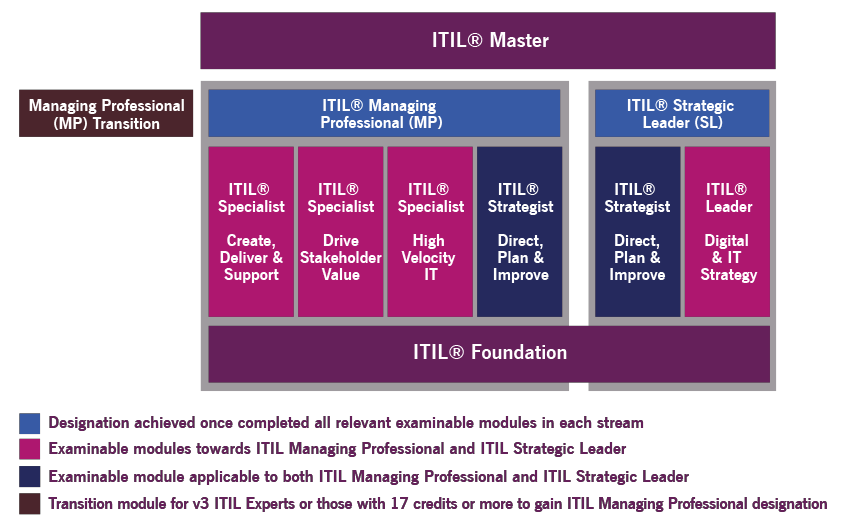
Lo schema di certificazione ITIL 4 è modulare e flessibile, con 2 percorsi principali che convergono verso ITIL Master:

🎓 Schema Completo ITIL 4

Schema di certificazione ITIL 4 - Foundation, Managing Professional, Strategic Leader, Master

Livello Certificazioni e Moduli Prerequisiti
Entry Level ITIL 4 Foundation (certificazione singola) ✅ Tutti partono da qui Nessuno
Managing Professional (MP) 4 moduli da completare:
1. ITIL Specialist: Create, Deliver and Support
2. ITIL Specialist: Drive Stakeholder Value
3. ITIL Specialist: High Velocity IT
4. ITIL Strategist: Direct, Plan and Improve
ITIL 4 Foundation
Strategic Leader (SL) 2 moduli da completare:
1. ITIL Strategist: Direct, Plan and Improve
2. ITIL Leader: Digital and IT Strategy
ITIL 4 Foundation + 3 anni esperienza manageriale
Extension Modules Moduli opzionali:
• ITIL 4 Specialist: Sustainability in Digital & IT
• ITIL 4 Specialist: Acquiring & Managing Cloud Services
• Altri in sviluppo
ITIL 4 Foundation
Master Level ITIL Master – Requires MP + SL + progetti documentati + assessment MP + SL completi

💡 Come Funziona lo Schema (Spiegato Semplice)

  1. Tutti partono da ITIL 4 Foundation – È il prerequisito universale
  2. Poi scegli il percorso in base al tuo ruolo:
    • → Sei practitioner/manager operativo? → Managing Professional (MP)
    • → Sei strategist/C-level/senior leader? → Strategic Leader (SL)
  3. Puoi fare entrambi i percorsi – MP e SL condividono 1 modulo (Direct, Plan and Improve), quindi se fai MP completo + 1 modulo extra (Digital & IT Strategy) ottieni anche SL
  4. ITIL Master richiede MP + SL + esperienza + progetti documentati. È il "top" della piramide ITIL

ITIL 4 Foundation: Il Punto di Partenza

ITIL 4 Foundation è la certificazione entry-level, rilasciata il 28 febbraio 2019. È la certificazione ITIL più diffusa (750.000+ certificazioni/anno globalmente).

🎯 Obiettivi ITIL 4 Foundation

La certificazione dimostra che possiedi una comprensione generale di:

  • ✓ I concetti chiave di service management
  • ✓ Come i principi e gli elementi del Service Value System (SVS) supportano il valore attraverso i servizi
  • ✓ I 7 Guiding Principles di ITIL 4
  • ✓ Le 4 Dimensions del service management
  • ✓ La Service Value Chain e le sue attività
  • ✓ Lo scopo e i componenti delle practices ITIL più importanti
  • ✓ Terminologia chiave ITIL 4

📋 Struttura Esame ITIL 4 Foundation

Formato esame 40 domande a scelta multipla
Durata 60 minuti (90 minuti se non madrelingua)
Punteggio superamento 26/40 (65%)
Materiale consentito ❌ Closed book (nessun materiale)
Modalità Online proctored o Test Center
Validità certificato Permanente (no rinnovo richiesto)
Costo €1.200-€1.600 (corso + esame + materiali)

👉 Leggi la guida completa: come prepararsi all'esame ITIL 4 Foundation

🎓 Cosa Include il Nostro Corso ITIL 4 Foundation

  • ✅ 2 giorni formazione intensiva (14 ore) con trainer accreditato PeopleCert
  • ✅ Materiali ufficiali Axelos in italiano + slide del corso
  • ✅ Voucher esame PeopleCert incluso (valore €350)
  • ✅ Simulatore d'esame con 150+ domande + spiegazioni
  • ✅ Supporto post-corso fino al superamento esame
  • ✅ Certificato digitale + badge PeopleCert
  • ✅ Success rate 97% studenti BITIL
Scopri il Corso ITIL 4 Foundation Vedi Date 2026

ITIL 4 Managing Professional (MP): Per Practitioner e Manager

Il percorso Managing Professional (ITIL MP) è progettato per practitioner IT, service manager, team leader, operations manager che lavorano quotidianamente nella gestione e erogazione di servizi IT.

📚 I 4 Moduli del Percorso MP

1. ITIL Specialist: Create, Deliver and Support (CDS)

Focus: Come creare, erogare e supportare servizi IT in ambienti moderni

Practices coperte: Service Desk, Incident, Problem, Knowledge, Change Enablement, Service Level, Monitoring & Event, Service Request

Per chi: Service Desk Manager, IT Operations Manager, Support Manager

Durata corso: 3 giorni | Esame: 40 domande, 90 min, 70% passing

→ Scopri il corso ITIL CDS

2. ITIL Specialist: Drive Stakeholder Value (DSV)

Focus: Come ingaggiare stakeholder e creare valore nel customer journey

Practices coperte: Relationship Management, Service Level, Service Catalogue, Service Design, Business Analysis, Customer Experience

Per chi: Service Manager, Customer Success Manager, Business Relationship Manager

Durata corso: 3 giorni | Esame: 40 domande, 90 min, 70% passing

→ Scopri il corso ITIL DSV

3. ITIL Specialist: High Velocity IT (HVIT)

Focus: ITIL in contesti Agile, DevOps, continuous delivery ad alta velocità

Temi coperti: DevOps culture, CI/CD, automation, microservices, cloud-native, resilience engineering

Per chi: DevOps Engineer, SRE, Agile Coach, Development Manager, Tech Lead

Durata corso: 3 giorni | Esame: 40 domande, 90 min, 70% passing

→ Scopri il corso ITIL HVIT

4. ITIL Strategist: Direct, Plan and Improve (DPI)

Focus: Strategia, pianificazione e miglioramento continuo dei servizi IT

Practices coperte: Strategy Management, Portfolio Management, Architecture Management, Continual Improvement, Measurement & Reporting, Risk Management

Per chi: IT Manager, Service Manager, Process Manager, Improvement Manager

Durata corso: 3 giorni | Esame: 40 domande, 90 min, 70% passing

⚠️ Nota: DPI è modulo universale – richiesto sia per MP che per SL

→ Scopri il corso ITIL DPI

✅ Quando ottieni ITIL Managing Professional: Dopo aver completato tutti e 4 i moduli (CDS + DSV + HVIT + DPI) ricevi il certificato ITIL Managing Professional + badge digitale. Dimostra competenza completa in IT service management operativo e tattico.

👉 Scopri il percorso completo ITIL Managing Professional

ITIL 4 Strategic Leader (SL): Per Leader e Strategist IT

Il percorso Strategic Leader (ITIL SL) è progettato per senior manager, CIO, IT Director, strategist, C-level executives che definiscono la direzione strategica dell'IT e guidano la trasformazione digitale.

📚 I 2 Moduli del Percorso SL

1. ITIL Strategist: Direct, Plan and Improve (DPI)

⚠️ Stesso modulo del percorso MP – È il modulo "universale" condiviso da entrambi i percorsi

Focus: Strategia, governance, portfolio, architettura, continual improvement

Vedi descrizione dettagliata nella sezione Managing Professional sopra

2. ITIL Leader: Digital and IT Strategy (DITS)

Focus: Come l'IT influenza e guida la strategia aziendale nell'era digitale

Temi coperti:

  • Digital transformation strategy
  • IT leadership in contesti di business disruption
  • Innovation management e digital business models
  • Risk e compliance in ambienti digitali
  • Leading teams attraverso cambiamenti culturali
  • Strategic planning per servizi digitali

Per chi: CIO, IT Director, Head of IT, Digital Transformation Lead, VP Technology

Prerequisiti: ITIL 4 Foundation + 3 anni esperienza manageriale (verificata)

Durata corso: 3 giorni | Esame: Assignment pratico + multiple choice

→ Scopri il corso ITIL DITS

✅ Quando ottieni ITIL Strategic Leader: Dopo aver completato DPI + DITS ricevi il certificato ITIL Strategic Leader. Dimostra che comprendi come IT influenza strategia di business e sei in grado di guidare organizzazioni digitali.

🔀 Percorso Combinato: MP + SL → ITIL Master

La buona notizia: Puoi ottenere ENTRAMBE le certificazioni (MP + SL) con solo 5 moduli totali invece di 6, perché DPI è condiviso:

Solo ITIL MP 4 moduli: CDS + DSV + HVIT + DPI
Solo ITIL SL 2 moduli: DPI + DITS
MP + SL (percorso completo) 5 moduli: CDS + DSV + HVIT + DPI + DITS
ITIL Master (top level) MP + SL + progetti documentati + assessment

💡 Il mio consiglio: Se hai tempo e budget, fai il percorso completo (5 moduli). Ottieni MP + SL e sei eligible per ITIL Master. È il massimo riconoscimento ITIL e apre porte a ruoli senior (ITIL Master sono ~5.000 globalmente, molto esclusivo).

👉 Dettagli completi percorso ITIL Managing Professional

👉 Dettagli completi percorso ITIL Strategic Leader

Migrazione da ITIL v3 a ITIL 4: ITIL Managing Professional Transition

Se hai già certificazioni ITIL v3, NON devi rifare tutto. Axelos ha creato un percorso accelerato di transizione.

🔄 ITIL MP Transition Module

Per chi: Candidati che hanno:

  • ✅ ITIL v3 Expert (certificato completo), OPPURE
  • ✅ 17+ crediti nello schema ITIL v3 Intermediate/Practitioner

Cosa include:

  • Corso di 3 giorni che copre le novità ITIL 4: SVS, Guiding Principles, Service Value Chain, nuove practices
  • Focus sulle differenze v3 → ITIL 4
  • Esame: 40 domande, 90 minuti, 70% passing score

Risultato: Ottieni ITIL Managing Professional (MP) direttamente, equivalente a chi fa i 4 moduli separati

Costo: €1.400-€1.800 (corso + esame) – Molto più economico dei 4 moduli separati (€5.000-€6.000)

💡 E Dopo il Transition Module?

Dopo aver ottenuto ITIL MP via Transition, se vuoi anche Strategic Leader, devi solo completare il modulo ITIL Leader: Digital and IT Strategy (DITS). Poi sei eligible per ITIL Master.

👉 Leggi la guida completa ITIL v3 to ITIL 4: migrazione e transition module

Quale Percorso ITIL 4 Scegliere per il Tuo Ruolo

La domanda più frequente: "Quale percorso devo fare?" Ecco una guida basata su ruolo e obiettivi di carriera.

Il Tuo Ruolo Percorso Raccomandato Moduli Specifici
Service Desk Agent/Analyst ITIL 4 Foundation (sufficiente) Foundation + opzionale ITIL Practitioner: Service Desk
IT Support Manager Foundation + CDS Create, Deliver and Support (operazioni day-to-day)
Service Manager Foundation + CDS + DSV + DPI 3 moduli (no HVIT se non DevOps)
DevOps Engineer / SRE Foundation + HVIT (priorità) High Velocity IT essenziale per DevOps
IT Manager / Operations Manager ITIL Managing Professional completo Tutti e 4 i moduli MP (CDS + DSV + HVIT + DPI)
CIO / IT Director / Head of IT ITIL Strategic Leader DPI + DITS (richiede 3 anni exp manageriale)
Consultant / ITIL Trainer MP + SL (percorso completo) 5 moduli, poi ITIL Master per massima credibilità
IT Auditor / Quality Manager Foundation + DPI Foundation + DPI Direct, Plan & Improve per governance e measurement
Business Relationship Manager Foundation + DSV Drive Stakeholder Value (focus su customer journey)
Project Manager IT Foundation + DPI Planning e portfolio + considera PRINCE2 come complemento

⏱️ Quanto Tempo Serve per Completare i Percorsi?

  • ITIL 4 Foundation: 2 giorni corso + 2-3 settimane studio = 1 mese
  • Managing Professional (MP): 4 moduli × 3 giorni = 12 giorni formazione. Timeline tipica: 6-12 mesi (1 modulo ogni 2-3 mesi)
  • Strategic Leader (SL): 2 moduli = 6 giorni formazione. Timeline: 3-6 mesi
  • MP + SL completo: 5 moduli. Timeline realistica: 12-18 mesi (part-time mentre lavori)
  • ITIL Master: Dopo MP+SL, ci vogliono 12-24 mesi per progetti + assessment

Le 4 Dimensions of Service Management

ITIL 4 introduce il concetto delle 4 Dimensions (dimensioni) – un modello olistico che dice: ogni servizio, pratica o decisione deve essere considerata da 4 prospettive diverse.

1. Organizations and People

Strutture organizzative, ruoli, competenze, cultura, leadership. Esempio: Implementi incident management? Considera: chi fa cosa (RACI), quale formazione serve, cultura blame-free.

2. Information and Technology

Dati, informazioni, knowledge, tecnologie, tool. Esempio: Quale ITSM tool usare? Quale knowledge base? Quali metriche trackare? Cloud o on-premise?

3. Partners and Suppliers

Ecosistema esterno: vendor, cloud provider, outsourcer, partner. Esempio: SLA con AWS, gestione fornitori service desk outsourced, contratti software vendors.

4. Value Streams and Processes

Flussi end-to-end che creano valore, processi operativi, workflow. Esempio: Value stream "From incident to resolution", "From idea to production".

💡 Perché le 4 Dimensions sono importanti: ITIL v3 tendeva a focalizzarsi solo su "processi e tecnologia" (dimensioni 2 e 4). ITIL 4 forza una visione olistica: se implementi una practice senza considerare persone, cultura, partner, non funzionerà. Serve equilibrio tra tutte e 4 le dimensioni.

Benefici Concreti di ITIL 4 per le Organizzazioni

Nelle implementazioni ITIL 4 che ho seguito negli ultimi 5 anni, questi sono i benefici misurati:

Beneficio Miglioramento Tipico Practices ITIL Coinvolte
Riduzione MTTR (Mean Time To Restore) -40% a -60% Incident, Problem, Knowledge Management
Aumento Service Availability Da 95% a 99%+ Availability, Monitoring & Event, Problem
Customer Satisfaction (CSAT) +25% a +40% Service Desk, Service Level, Relationship Mgmt
Riduzione Costi Operativi IT -15% a -30% Automation, Knowledge, Continual Improvement
Time to Market Nuovi Servizi -30% a -50% Release, Change Enablement, Deployment (HVIT)
Riduzione Change Failures Da 15-20% a <5% Change Enablement, Service Validation & Testing
ROI Implementazione ITIL 4 250-400% in 2-3 anni Intero framework

Casi Pratici: ITIL 4 in Azione

Esempi reali di implementazioni ITIL 4 di successo dalla mia esperienza:

📌 Caso 1: Startup Fintech – ITIL 4 + DevOps

Cliente: Fintech 150 persone, 20 deploy/giorno, stack AWS/Kubernetes

Sfida: "ITIL è troppo pesante per noi, siamo Agile/DevOps"

Soluzione ITIL 4:

  • Implementato solo 8 practices prioritarie (Incident, Problem, Change Enablement variant DevOps, Knowledge, Service Desk, Monitoring, Deployment, Software Development)
  • Usato Guiding Principle "Keep it simple" – No burocrazia, automation-first
  • Integrato ITIL practices con toolchain esistente (Jira, GitLab, PagerDuty, Datadog)

Risultati: MTTR -55%, deployment success rate da 92% a 98.5%, zero conflict ITIL-DevOps (anzi, complementari)

📌 Caso 2: Banca Enterprise – Migration ITIL v3 → ITIL 4

Cliente: Banca 5.000 dipendenti, ITIL v3 implementato dal 2010

Sfida: ITIL v3 percepito come rigido, non adatto a cloud migration e digital transformation in corso

Soluzione ITIL 4:

  • Migration graduale v3 → ITIL 4 in 18 mesi
  • Formazione 120 persone IT (20 certificati MP, 80 Foundation, 20 practitioner modules)
  • Re-design value streams per servizi critici (home banking, mobile app, pagamenti)
  • Adoption practices cloud (Infrastructure & Platform Management per AWS/Azure hybrid)

Risultati: Time to market nuovi servizi digitali -45%, availability da 97.2% a 99.4%, team "ringiovanito" (meno percezione di burocrazia)

Risorse per Approfondire ITIL 4

📚 Guide ITIL Complete

  • → ITIL: Panoramica completa
  • → Storia ITIL (v1 → v2 → v3 → 4)
  • → ITIL v3 vs ITIL 4: differenze
  • → Cos'è IT Service Management

🎓 Formazione e Corsi

  • → Corso ITIL 4 Foundation
  • → Percorso Managing Professional
  • → Percorso Strategic Leader
  • → Calendario corsi 2026

🔗 Framework Correlati

  • → COBIT (IT Governance)
  • → ISO 27001 (Security)
  • → PRINCE2 (Project Mgmt)
  • → DevOps e ITIL 4

Conclusioni: ITIL 4 è il Futuro del Service Management

ITIL 4 nel 2026 è il framework di riferimento per IT Service Management moderno. Ha superato i limiti di ITIL v3, integrato DevOps/Agile/Cloud, e fornito un modello flessibile (SVS) adattabile a qualsiasi contesto.

Se lavori in IT nel 2026, ITIL 4 è essenziale perché:

  • ✅ È lo standard globale per service management (usato da 90% Fortune 500)
  • ✅ È richiesto per ruoli Service Manager, IT Operations, Service Desk Lead, DevOps/SRE
  • ✅ Si integra perfettamente con cloud, DevOps, Agile, automation (non è più "waterfall only")
  • ✅ Fornisce linguaggio comune tra IT, business, vendor, auditor
  • ✅ Supporta conformità ISO 20000, audit, governance
  • ✅ Certificazione ITIL = career boost (+15-25% salary premium, più opportunità)

Che tu sia all'inizio della carriera IT o senior manager, c'è un percorso ITIL 4 per te. E tutto inizia con ITIL 4 Foundation. 🚀

Inizia il Tuo Percorso ITIL 4 Oggi

Certificati con i nostri trainer accreditati PeopleCert. Corso ufficiale, materiali Axelos, simulatore d'esame, supporto completo fino alla certificazione.

📚 Corso ITIL 4 Foundation 📅 Prossime Date 2026

✅ Success rate studenti BITIL: 97% | Soddisfazione: 4.9/5 | Oltre 3.000 professionisti certificati

Hai domande su ITIL 4 o sul percorso certificazione? I nostri trainer certificati PeopleCert sono disponibili. Contattaci via email, WhatsApp +39 349.6588077 o telefono.

⚠️ Nota sui Marchi Registrati

ITIL®, PRINCE2®, PRINCE2 Agile® sono marchi registrati di PeopleCert per conto di Axelos Limited. BITIL.COM è un Accredited Training Organization (ATO) PeopleCert autorizzato all'erogazione di corsi ufficiali ITIL e al rilascio di voucher d'esame. Tutti i nostri trainer sono accreditati PeopleCert e hanno esperienza pluriennale in IT Service Management e implementazioni ITIL. Verifica i nostri accreditamenti ufficiali.

Keywords: ITIL 4, ITIL 4 Foundation, schema certificazione ITIL, Service Value System, ITIL practices, ITIL Managing Professional, ITIL Strategic Leader, ITIL Master, guiding principles ITIL, 4 dimensions ITIL, service value chain, ITIL 4 vs ITIL v3, certificazione ITIL, corso ITIL 4, ITIL DevOps, High Velocity IT, Create Deliver Support, Drive Stakeholder Value, Direct Plan Improve, Digital IT Strategy, ITIL 2026, PeopleCert, Axelos, IT service management, ITSM framework


Articolo pubblicato: 2019 | Ultimo aggiornamento: Febbraio 2026
Guida completa a ITIL 4, aggiornata con le ultime novità 2026 e feedback da implementazioni reali.
Iscriviti alla newsletter per ricevere aggiornamenti su ITIL, service management e nuove guide.

BITIL.COM è una organizzazione di professionisti ed esperti senior, dell' Information & Communication Technology (ICT) il cui interesse principale è la diffusione, la divulgazione della conoscenza [...]

"Ho trovato questo corso molto interessante e utile. Ha dato alcune buone idee da applicare in azienda."

Alessandra P.

Alessandra P.

Service Manager

This was one of the best workshops I have ever attended. The venue, materials & facilitation was excellent.

Stephanie S.

Stephanie S.

Project Manager Junior

The nature of participation was simply exceptional, concrete exercise, concrete examples, excellent analysis and feedback.

Mark J.

Mark J.

CIO

"Un corso molto utile, varie esercitazioni e un tutor disponibile. Questa esperienza ha aumentato la mia professionalità."

Marco B.

Marco B.

Project Manager

Real practice questions and accurate answers from BITIL helped me a lot in my exam. I successfully got good marks. Wonderful.

Samuel C.

Samuel C.

Developer

I nostri servizi

  • Login
  • Catalogo dei Corsi
  • Calendario Corsi
  • Formazione Aziendale
  • Area Download
  • Copyright

Customer Service

Where we are
Email: training@bitil.com
Mobile/Whatsapp: +39 349.6588077
2026 © Copyright BITIL.COM - All Right Reserved
ITIL®, PRINCE2®, PRINCE2 Agile® are Registered Trade Marks of the PeopleCert group. IASSC Lean Six Sigma™ is trademark of the PeopleCert group. Used under licence from PeopleCert. All rights reserved. TOGAF® is a registered trademarks of The Open Group in the United States and other countries. COBIT® 2019 is a Registered Trade Marks of the Information Systems Audit and Control Association and the IT Governance Institute. AgilePM® is a registered trademark of Agile Business Consortium. All rights Reserved. The APMG International Scrum and Swirl Device logo is a trademark of The APM Group Limited, used under permission of The APM Group Limited. All rights reserved. APMG International ISO/IEC 20000™ is a trademark of The APM Group Limited. All rights reserved. APMG International ISO/IEC 27001™ is a trademark of The APM Group Limited. All rights reserved. FitSM® is a registered trademark of ITEMO e.V. DTMethod® is a registered trademark of Inprogress Sp.zo.o.
  • Certificazioni
    • Agile
    • Agile Scrum
    • Business Continuity
    • CyberSecurity
      • ISO 27001
      • NIST
    • Design Thinking
    • DevOps
    • Enterprise Architecture
    • Governance System
    • Lean Six Sigma
      • LSS Yellow Belt
      • LSS Green Belt
      • LSS Black Belt
    • Project Management
      • AgilePM
      • PM²
      • PRINCE2
      • PRINCE2 Agile
    • Service Management
      • FitSM
      • ISO 20000
      • ITIL
        • ITIL Foundation
        • ITIL Managing Professional
        • ITIL Strategic Leader
        • ITIL Practitioner
      • OpenSM
    • SW Testing
  • Best Practices
    • Agile ®
      • Agile Scrum
        • Scrum Team
      • AgilePM®
        • AgilePM v2 a v3
        • AgilePM v3: Guida completa
        • Daily Stand-up
        • Project Approach Questionnaire
        • Ruoli e Responsabilità
    • Artificial Intelligence
      • ISO 42001 AIMS
      • AIMS Assessment
      • ISO 42001 Toolkit
    • Business Continuity
      • ISO 22301 Continuity
    • Cybersecurity
      • NIS2
        • NIS2 Art. 21
        • NIS2 Art. 23
        • NIS2 Art. 24
          • Procurement Cybersecurity Policy
          • Vendor Security Questionnaire
        • NIS2 Art. 26
        • NIS2 Art. 27
        • NIS2 Art. 28
    • Data Protection
    • Design Thinking
      • Double Diamond
    • DevOps ®
      • Che cosa è DevOps
      • Site Reliability Engineer
      • Evoluzione DevAIOps
    • ISO/IEC 27000 ®
      • ISO/IEC 27001 ®
      • ISO 27001 Toolkit
      • ISO/IEC 27002 ®
      • ISO/IEC 27005 ®
      • ISO/IEC 27035 ®
      • ISO/IEC 27701 ®
    • IT Governance
      • CobiT ®
        • CobiT 5
        • CobiT 2019
        • Come prepararsi all'esame COBIT Foundation
    • ITIL ®
      • IT Service Management
      • ITIL ® Evoluzione
      • ITIL ® v3
        • ITIL ® Service Strategy
          • Modelli organizzativi
        • ITIL ® Service Design
          • CFIA
        • ITIL ® Service Transition
        • ITIL ® Service Operation
          • Kepner-Tregoe
        • ITIL ® CSI
        • ITIL ® v3 to 4
      • ITIL ® 4
        • ITIL Foundation
        • ITIL 4 CDS
          • What is CDS
          • Weighted Shortest Job First
        • ITIL 4 DSV
          • What is DSV
          • Weighted Shortest Job First
        • ITIL 4 HVIT
          • What is HVIT
          • Antifragility
        • ITIL 4 DPI
          • What is DPI
        • ITIL 4 DITS
          • What is DITS
          • Practical Assignment
        • ITIL4 Roles based
        • ITIL4 Practices based
      • ITIL ® v4 to v5
      • ITIL ® 5
        • Schema Certificazione ITIL v5
        • ITIL 5 Roles based
        • Come superare esame ITIL Foundation
      • ITIL ® Register Certificate
      • Confronto Certificazioni ITIL
    • Lean Six Sigma ®
      • Schema Certificazione Lean Six Sigma
      • LSS Define Phase
        • The Basics of Six Sigma
          • Meanings of Six Sigma
          • History of Six Sigma
          • LSS Project Deliverables
          • Y=f(x)
          • Voice of Customer
          • Six Sigma Teams
      • LSS Measure Phase
      • LSS Analyze Phase
      • LSS Improve Phase
      • LSS Control Phase
    • PRINCE2 ®
      • Schema Certificazione PRINCE2
      • Transition to PRINCE2 7
    • Project Management
      • Evoluzione del project management
      • ISO 21500 Project
      • PM²
        • Architettura PM²
        • Ciclo di vita PM²
        • Ruoli e artefatti PM²
        • Progetto PM²
        • Documenti PM²
      • PRINCE2 Agile®
    • Risk Management
      • ISO 31000 ® Risk
    • Service Management
      • FitSM®
      • ISO/IEC 20000 ®
        • ISO 20000-1
        • ISO 20000 Toolkit
    • SW Testing
    • TOGAF® Standard
      • Structure of TOGAF®
      • Migration to TOGAF® EA certification
      • TOGAF® View e Viewpoint
      • Content Metamodel
      • TOGAF® vs ITIL
      • TOGAF® 9 vs TOGAF 2022
  • Corsi
    • Agile ®
      • AgilePM® Foundation
      • AgilePM® Practitioner
      • Scrum Essentials
      • Scrum Master
      • Product Owner
    • Artificial Intelligence
      • ISO 42001 Foundation
      • ISO 42001 Lead Implementer
      • ISO 42001 Lead Auditor
    • Cloud Management
    • Cobit ®
      • Cobit ® Foundation
    • Design Thinking
      • Design Thinking Foundation
    • DevOps ®
      • DevOps ® Foundation
    • DORA Resilience
      • DORA Foundation
    • FitSM®
      • FitSM® Foundation
    • GDPR
      • GDPR Introduction
      • GDPR Foundation
      • Data Protection Officer
    • ISO 20000
      • ISO 20000 Foundation
      • ISO 20000 Auditor
      • ISO 20000 Lead Auditor
    • ISO 21500
      • ISO 21500 Project Manager
    • ISO 22301 Continuity
      • ISO 22301 Foundation
      • ISO 22301 Lead Auditor
    • ISO 27000
      • ISO 27001 Foundation
      • ISO 27001 Auditor
      • ISO 27001 Lead Auditor
      • ISO 27005 Foundation
      • ISO 27701 Foundation
      • Leaders in Action
    • Soft Skills
      • Leaders in Action
    • ISO 31000 Risk Mgmt
      • ISO 31000 Foundation
    • ITIL ®
      • ITIL ® Foundation
      • ITIL ® Foundation Bridge
      • ITIL ® Managing Professional
        • ITIL ® Create Deliver and Support
        • ITIL ® Drive Stakeholder Value
        • ITIL ® High Velocity IT
        • ITIL ® Direct Plan Improve
      • ITIL ® Strategic Leader
        • ITIL® Direct Plan Improve
        • ITIL ® Digital and IT Strategy
      • ITIL ® 4 Practitioner
        • ITIL® 4 Service Request Management
        • ITIL® 4 Service Desk
        • ITIL® 4 Monitoring and Event Management
        • ITIL® 4 Problem Management
        • ITIL® 4 Incident Management
    • Lean Six Sigma ®
      • Lean Six Sigma® Yellow Belt
      • Lean Six Sigma® Green Belt
      • Lean Six Sigma® Black Belt
    • NIS Cybersecurity
      • NIS Foundation
      • NIS Officer
    • OpenSM ®
      • OpenSM® Foundation
    • PM²® EU Project
      • PM²® Foundation
    • PRINCE2®
      • PRINCE2® Foundation
      • PRINCE2® Practitioner
      • PRINCE2 Agile®
        • PRINCE2 Agile® Foundation
        • PRINCE2 Agile® Practitioner
    • Privacy
      • ISO 27701 Privacy Foundation
      • NIST Privacy Foundation
    • SW Testing
      • SW Testing Foundation
    • TOGAF® Standard
      • TOGAF® EA Foundation
      • TOGAF® EA Practitioner
  • Servizi
    • Erogazione Corso
      • eLearning Self-Kit
      • eLearning Online Tutor
      • Virtual Classroom
      • Blended
      • Traditional Classroom
    • Sessione Esame
      • Esami online con Peoplecert
        • Compatibilty Check
        • Prepara la tua stanza
        • Prepara il documento identità
        • 24h prima esame
        • Cosa fare il giorno dell'esame
      • Esami online con APMG
      • Esami online con Open Group
        • Esame TOGAF® da Casa
        • Esame TOGAF® in Test Center
    • Formazione Continua
      • PeopleCert CPD Scheme
      • Rinnovo Certificazioni PeopleCert
      • PMI PDU Scheme
    • Calendario Corsi
    • Training Book
    • Cancellation Policy
    • Make a Complaint
    • Evaluation Form
    • FAQ
  • Knowledge
    • Exam Simulator
      • AgilePM® Exam Simul
      • COBIT Exam Simul
      • DevOps Exam Simul
      • ISO 20k Exam Simul
      • ISO 22301 Exam Simul
      • Scrum Master Exam Simul
      • Scrum Product Owner Exam Simul
      • TOGAF® Exam Simul
    • Assessment
      • Project Mgr vs Inesperto
      • Project Mgr vs Team Mgr
      • Leader vs Manager
      • Service Mgr vs Inesperto
    • News
      • Agile Scrum
      • Design Thinking
      • DevOps
      • Enterprise Architecture
      • Examination Institute
      • Information Security
      • Normative
      • Project Management
      • Service Management
    • Eventi
    • Webinar
    • Download
  • Contatti
    • Chi siamo
      • Accreditamenti
      • Job Opportunity
      • Partner Program
      • MePA Pubblica Amministrazione
    • Legal Policy
      • Third Party Consent
      • Newsletter Consent
      • Copyright | Trademarks
    • Login Form
  0  - 0.00‎€
Your shopping cart is empty!
USD EUR GBP
Top
Catalogo Corsi    Formazione Aziendale    Calendario Corsi  Contattaci 

Training Course Catalogue

Training Course Catalogue 

Unlock Your Potential, Transform Your Future!